

Boldly Go To Some Star Attractions
Stare into space and you’ll discover dark skies to amaze and delight overhead in Lancaster and beyond!
Article by Louise Bryning
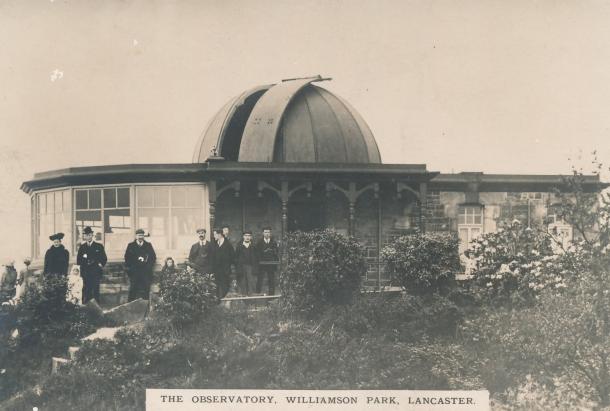
On a good night, stars can be seen in all their sparkling glory from Williamson Park and the nearby Forest of Bowland including the Lune Valley. In fact, Lancaster has a tradition of star gazing going back to Victorian times when the Greg Observatory was established in Williamson Park and although the observatory was demolished in 1960, Lancaster and Morecambe Astronomical Society still organise events in the park open to anyone interested in astronomy. Named after John Greg, a keen amateur astronomer from a local mill owning family, the observatory opened in 1892 and next year – 2027 - marks a century since locals were invited to experience a rare total eclipse of the sun from the park. The foundations of the observatory still remain and can be discovered by walking from the park’s Wyresdale Road entrance and following a path to the left, marked by a stone ball, which leads uphill into woodland and the site of the building.
Nowadays, the only known observatory in the city is at Lancaster University. The Dame Kathleen Ollerenshaw Observatory was named after the mathematician and keen amateur astronomer who was also a former Pro-Chancellor. It was opened in 2002 by Sir Patrick Moore who presented the BBC’s Sky At Night for more than 55 years and was an honorary graduate of the university. The University’s Physics Department also has a mobile planetarium – the LUniverse – an educational resource for schools and the general public in Lancashire and Cumbria. And one of its space physicists, Professor Jim Wild, whose research focuses on the links between the sun, earth and other planets, is currently President of the Royal Astronomical Society.
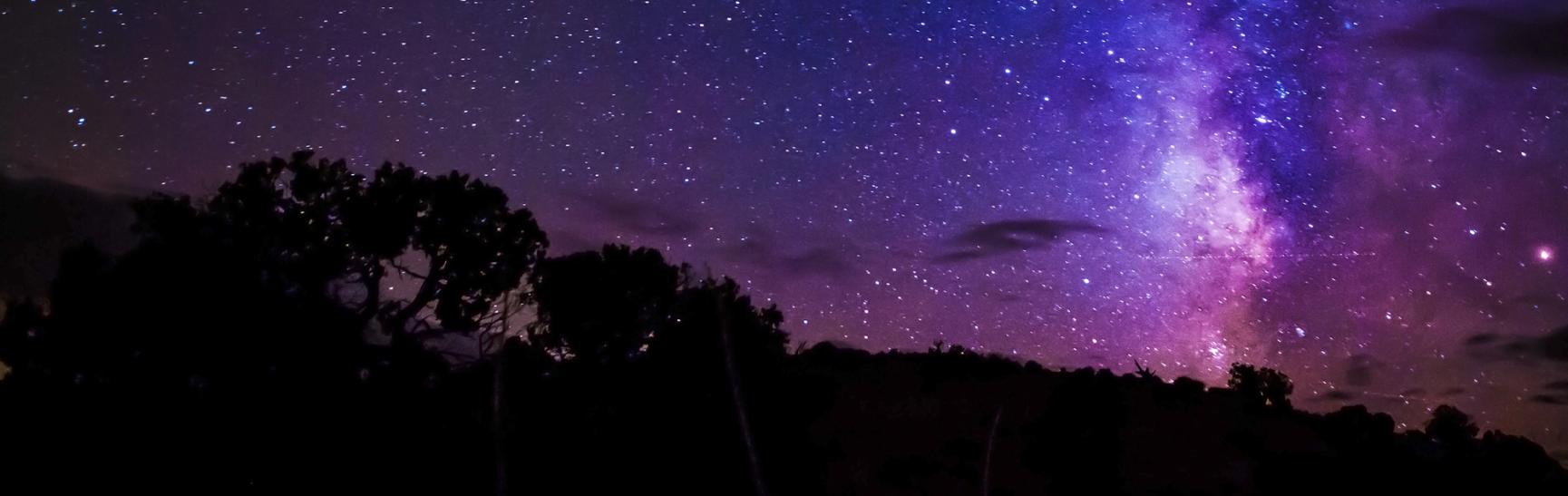
Just a few miles from Lancaster, near the village of Caton, where the Gregs had a mill, is one of the Forest of Bowland’s four Dark Sky Discovery Sites – the Crook O’Lune picnic site. This has been recognised as having one of the darkest skies in England, away from the light pollution of our towns and cities. From there, on a clear, cloud free night, it should be possible to spot the Milky Way or constellations, including Orion, with the naked eye.
Other Dark Sky Discovery Sites further afield in the Forest of Bowland are Beacon Fell Country Park, Slaidburn and Gisburn Forest Hub. Visitors wanting to make the most of their Dark Skies experience, can stay in Dark Sky Friendly accommodation whose owners have attended workshops run by the National Landscape (formerly Areas of Outstanding Natural Beauty) and a local astronomer. These businesses are proactively reducing light pollution and can provide guests with information about star gazing in the area. Several are within easy reach of Lancaster and include: Roeburnscar Holiday Cottage near Wray; Riverside Caravan Park at High Bentham; Orchard Glamping in Catterall near Garstang and Bowland Holiday Cottages at Abbeystead.
Although the longer nights and darker skies in winter tend to offer more of a starry spectacle, the Perseids meteor shower, promising dozens of shooting stars, takes place in mid-August. Among spring constellations are Leo and the Plough while autumn offers up the Andromeda Galaxy, the furthest object from the earth that is just visible with the naked eye.
Whatever time of year you decide to star gaze, the Dark Skies really are the limit!